© 2026 Nikon SLM Solutions AG


Europe is rapidly pivoting towards relying less on outside help for defense readiness. Since 2022, European defense budgets have grown significantly, with NATO member states accelerating spending commitments and governments prioritizing sovereign industrial capability. For defense manufacturers, this shift creates both opportunity and obligation. The demand signal is clear. The challenge is translating increased investment into fielded capability at the pace that modern security requirements demand.
Across the industry, manufacturers are reassessing production strategies, sustainment models, and supply chain architecture. Metal additive manufacturing is increasingly central to those conversations, not as a future technology to monitor but as a production capability to deploy. Nikon Advanced Manufacturing (Nikon AM) with its Nikon SLM Solutions unit is working alongside defense manufacturers and government stakeholders to accelerate that transition.
The Readiness Challenge Facing Defense Manufacturers
Readiness is not an abstract metric. It is the practical ability to deploy capable, maintained, and adequately supplied platforms when and where they are required. Achieving it depends heavily on manufacturing. When production timelines stretch, when spare parts take months to procure, or when a single failure by a supplier disrupts an entire program, operational readiness degrades.
Defense programs across Europe are confronting several converging pressures: aging platforms with obsolete or hard-to-source components, increased operational tempo driving higher maintenance demand, and an expectation from governments that industry deliver capability faster than traditional procurement cycles allow. Conventional manufacturing methods are not designed to respond to these conditions at speed.
The gap between what is needed and what traditional manufacturing can deliver is where additive manufacturing creates its most immediate value.
Industry Collaboration Is Shaping the Path Forward
One of the most significant shifts in defense manufacturing over the past two years has been the quality of dialogue between manufacturers, government procurement bodies, and technology providers. Conversations that were once exploratory are now focused on implementation. Questions around qualification, testing requirements, and production scalability are being addressed with growing urgency and practical intent.
Industry forums and working groups have become increasingly valuable in identifying shared barriers and accelerating adoption. The defense sector has historically been slower to adopt new manufacturing technologies than aerospace or automotive, largely due to rigorous qualification requirements. Collaborative ecosystems that bring together original equipment manufacturers (OEMs), material suppliers, machine providers, and government stakeholders are beginning to close that gap by establishing shared frameworks and validation pathways.
Cross-sector learning is also accelerating progress. Aerospace applications of metal AM have generated qualification data, process understanding, and operational confidence that translates directly into defense environments. Manufacturers who have already navigated complex certification processes in civil aerospace are bringing that knowledge to defense programs, reducing the time and cost of adoption.
AM Across the Board: Where Additive Manufacturing Is Delivering Value Today
Metal AM is operational across several defense manufacturing domains, and its impact is measurable.
Sustainment and lifecycle support
Many defense platforms in service today were designed and manufactured decades ago. Original production tooling no longer exists, original suppliers may no longer be active, and the cost of requalifying a conventional manufacturing process for a single low-volume spare part is often prohibitive. Metal AM solves this directly. From a digital file, replacement components can be printed on demand, without specialised tooling investment and without minimum order quantities. Platforms that would otherwise be grounded for lack of a single part can be returned to service in days rather than months.
Performance improvement beyond replacement
AM-produced replacement parts are not simply equivalent to their original counterparts. The design freedom that AM enables allows engineers to improve upon the original specification. Topology-optimized brackets are lighter without sacrificing structural integrity. Consolidated assemblies eliminate joints and interfaces that were potential failure points in the original design. In aerospace and defense applications where weight, thermal performance, and reliability are mission-critical, this is a meaningful operational advantage.
Scaling toward serial production
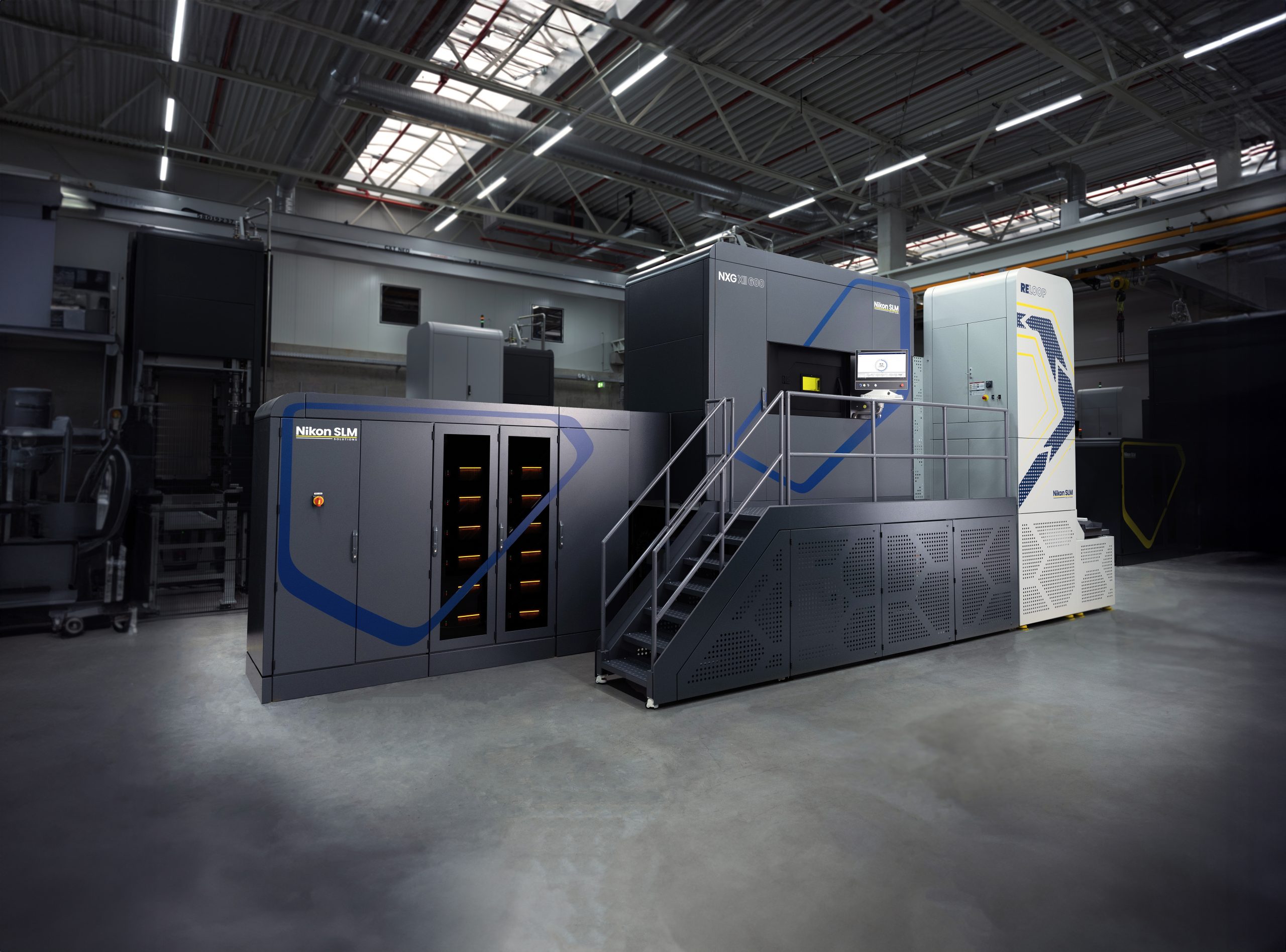
Metal AM has matured significantly as a production technology. The Nikon SLM Solutions NXG XII 600, with twelve 1 kW lasers and a 600 x 600 x 600 mm build envelope, was developed specifically to meet the throughput demands of serial production environments. Multi-laser redundancy, closed-loop process monitoring, and integrated powder management systems deliver the repeatability and traceability that defense qualification requires.
Programs that piloted AM for prototype components are increasingly transitioning those same components into volume production on the same platform. Today, close to 100 NXG systems, including the NXG 600E large-format platform, are already deployed globally, many supporting some of the most demanding aerospace and defense applications across a wide range of alloys.
Accelerating Qualification: The Industry’s Shared Priority
Qualification remains the most significant barrier to broader deployment of metal AM in defense programs. The challenge is not technical capability. Modern AM systems consistently produce components that meet or exceed the mechanical properties of their conventionally manufactured equivalents. The challenge is the documentation, testing methodology, and process validation infrastructure needed to satisfy defense certification standards.
Progress is being made through several mechanisms, and Nikon AM is actively involved in programs designed to accelerate and streamline qualification processes. Digital manufacturing frameworks that capture full process genealogy, from powder batch to build parameters to post-processing, are enabling faster validation cycles by providing auditors with the traceability data they require. Standardized testing methodologies developed through cross-industry collaboration are reducing the redundancy of qualification work across programs. And proven production systems with documented process stability are reducing the perceived risk that has historically slowed adoption.
Open parameter access across Nikon SLM Solutions systems is particularly relevant here. Defense manufacturers and their material supply chain partners can develop, own, and document their own qualified parameter sets. This means qualification evidence is owned by the manufacturer, not dependent on machine vendor approval, which is essential in programs involving classified or export-controlled material specifications.
Nikon SLM Solutions: Precision Manufacturing Expertise Applied to Defense
Nikon’s heritage in precision optics, optomechatronics, and advanced manufacturing systems provides a foundational advantage in industrial metal AM. The engineering disciplines required to produce laser systems with the beam quality, pointing accuracy, and thermal stability that reliable AM demands are the same disciplines that define Nikon’s core expertise. This is not a background that most AM machine providers share.
Nikon SLM Solutions systems support applications across aerospace, defense, energy, and medical industries, processing alloys including titanium, nickel superalloys, aluminum, and high-strength steels.
European defense manufacturers can draw on lessons already established through defense manufacturing initiatives in the United States, where metal AM has been integrated into sustainment programs, rapid acquisition pathways, and forward-deployed manufacturing models. Nikon SLM Solutions brings that application knowledge and the production-ready workflows developed from those programs directly to European customers.
The New Strategy: Distributed, Digital, and Built for Uncertainty
Metal AM is most powerful when considered as part of a broader advanced manufacturing strategy. The combination of digital part libraries, qualified process parameters, and distributed machine networks creates a manufacturing model that is fundamentally more resilient than centralized conventional production. When a critical component can be produced at multiple sites from a shared digital file, single points of failure in the supply chain are eliminated.
For European defense manufacturers building sovereign production capability, this model has strategic significance. It enables manufacturing capacity to be established within national boundaries, reduces dependence on international supply chains for critical components, and creates the flexibility to surge production capacity in response to operational demand. In a period of sustained geopolitical uncertainty, that flexibility has real strategic value.
Nikon SLM Solutions systems are fully offline capable and support local data storage, ensuring that design files and production parameters remain within the operator’s own secure infrastructure. This is a baseline requirement for defense manufacturing environments and a design principle across the Nikon SLM portfolio.
AM for Defense: From Readiness to Resilience
The defense manufacturing challenge in Europe is not a shortage of investment. It is translating that investment into production capacity, sustainment capability, and supply chain resilience faster than the current industrial base can deliver. Metal additive manufacturing addresses each of those constraints in ways that complement, rather than replace, existing manufacturing infrastructure.
Nikon Advanced Manufacturing and its Nikon SLM Solutions unit are committed to supporting European defense manufacturers through that transition, providing proven systems, application expertise, and long-term partnership rather than isolated technology deployments. The goal is industrialized additive manufacturing integrated into production and sustainment operations, delivering measurable improvements in readiness and resilience. To learn more about how Nikon SLM Solutions supports defense manufacturing programs, contact our team.


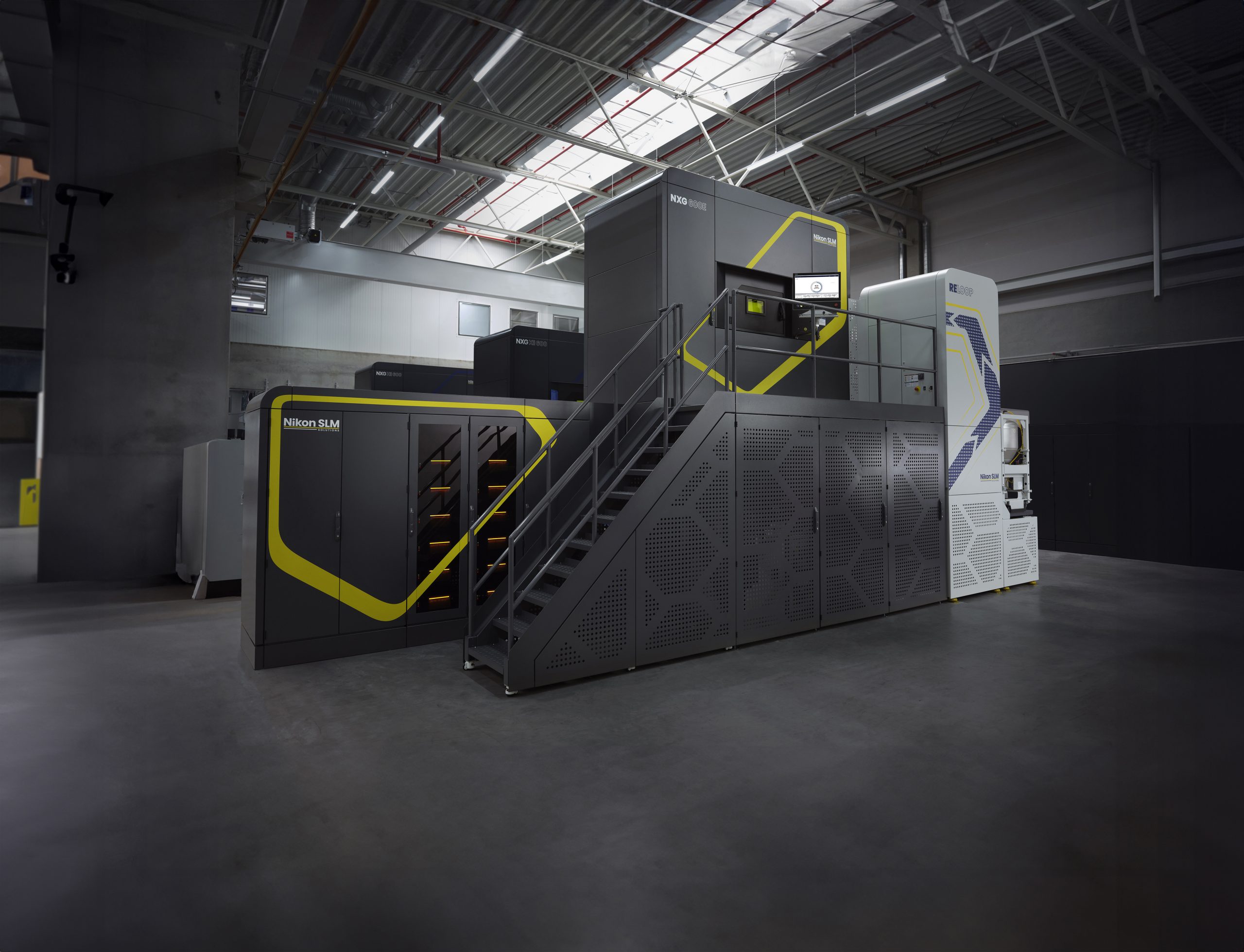






 NXG 600E
  NXG XII 600
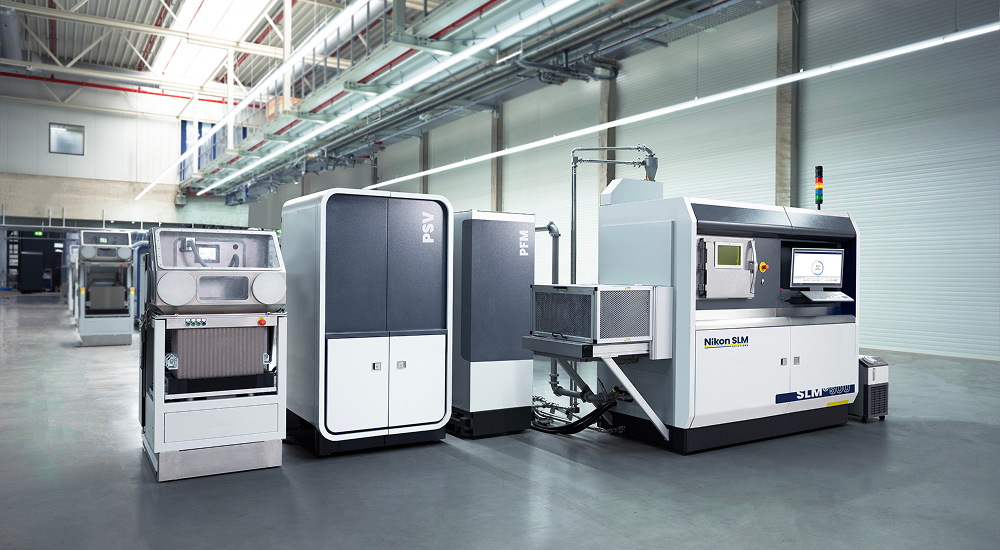
  SLM®500
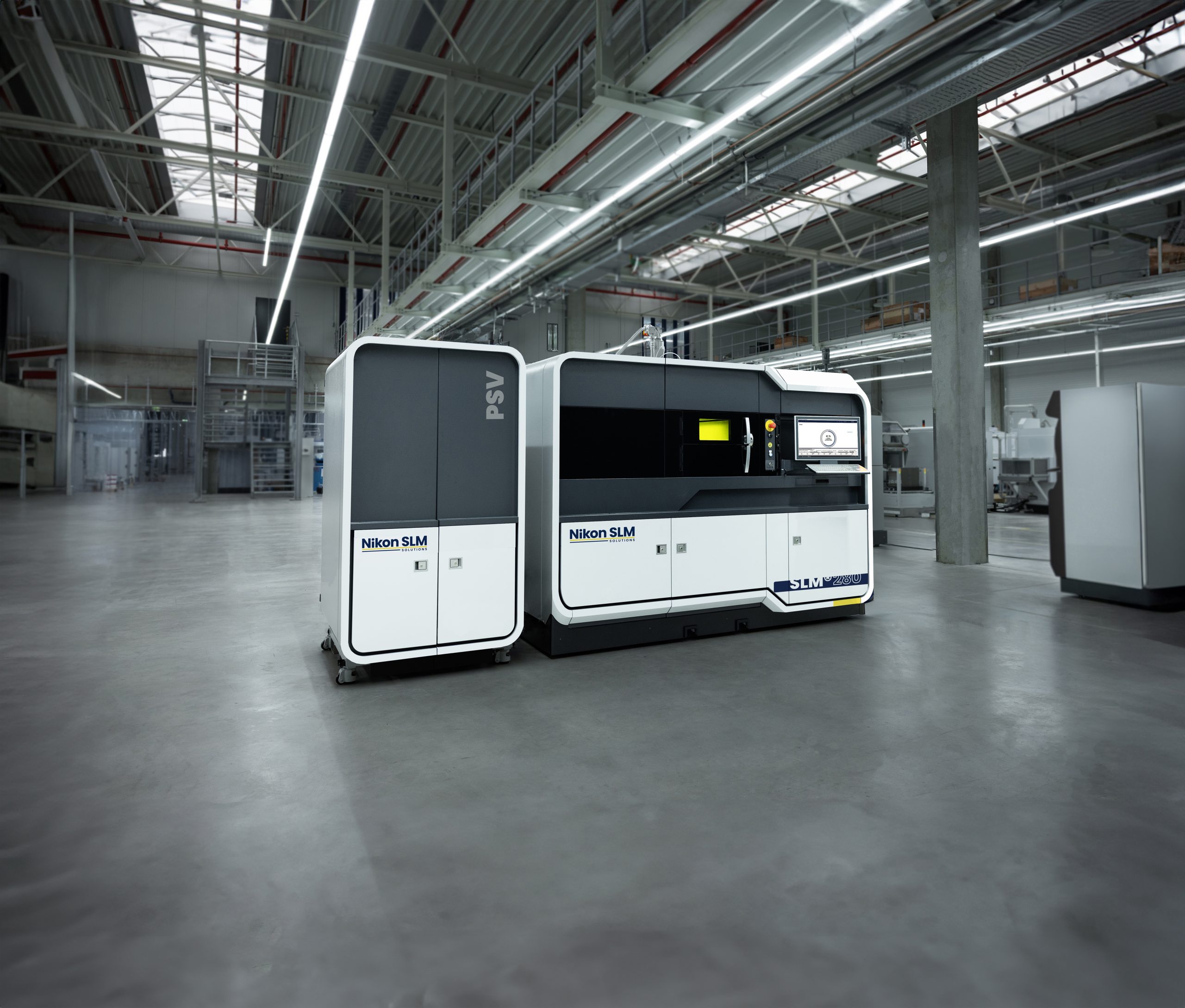
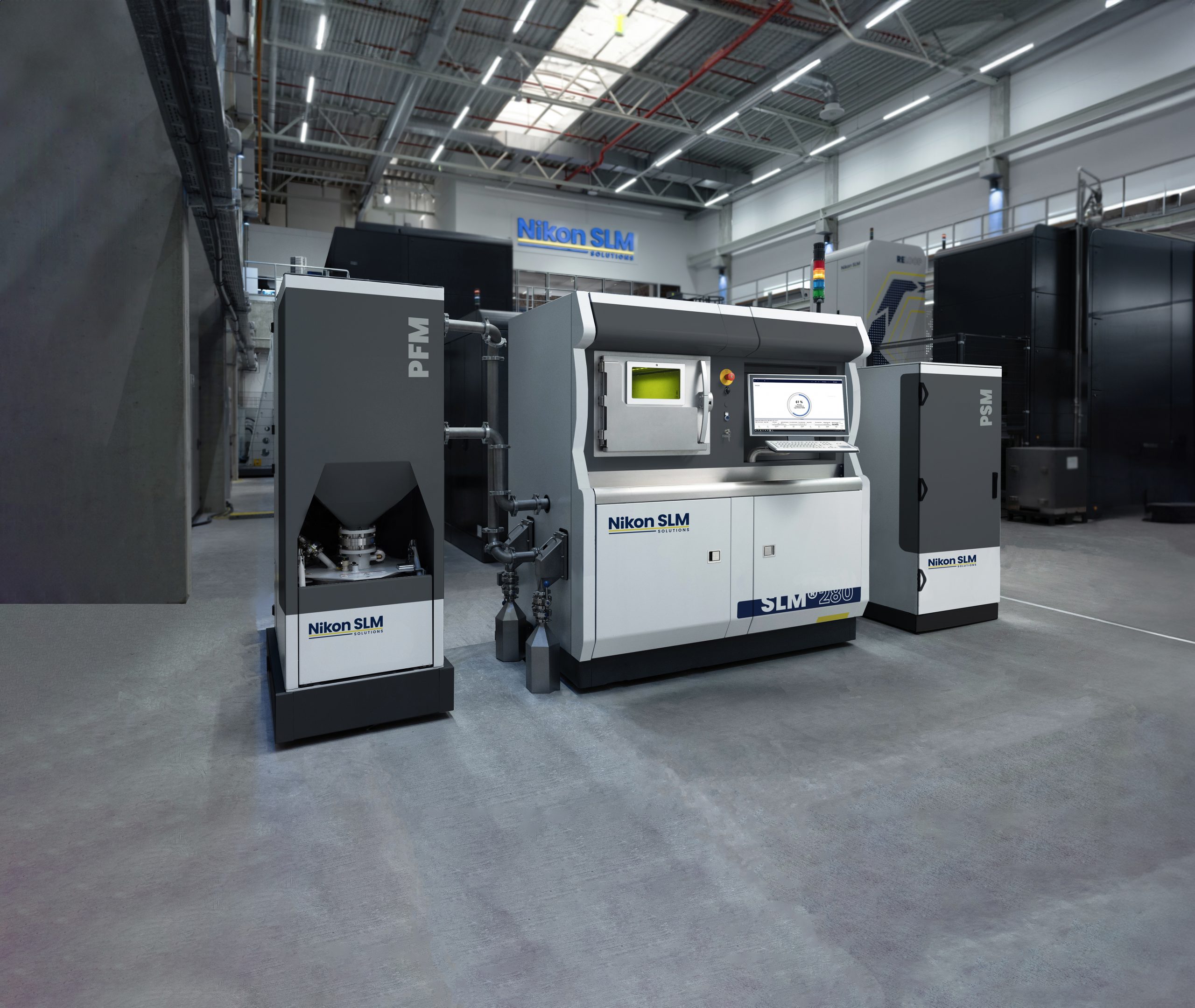
  SLM®280 PS
  SLM®280 2.0