© 2026 Nikon SLM Solutions AG


Data Centers Have a Heat Problem. The Cooling Systems Built to Solve It Are Part of the Problem.
The energy consumed by data centers is no longer a footnote in sustainability discussions. In Ireland, data centers now account for a share of national electricity consumption large enough to have prompted legal restrictions on new builds. Globally, the picture is similar: as demand for compute continues to climb, the energy required to run and cool the underlying hardware is climbing with it.
The core issue isn’t just how much power servers consume. It’s what happens to that power once it’s been used. Virtually all of it turns into heat, and that heat needs somewhere to go. The problem is that removing it costs nearly as much energy as generating it in the first place.
Why Conventional Cooling Has Hit Its Limit
Traditional data center cooling relies on moving air across hot components, then removing that warm air through large heating, ventilation, and air conditioning (HVAC) systems. The approach works at moderate power densities, but GPU power consumption has jumped from 100 to 200 watts per chip a few years ago to several hundred watts or more today, with high-end accelerators pushing into the kilowatt range. Air simply cannot remove heat fast enough at these densities without moving enormous volumes of it, which means more fans, more HVAC capacity, and more energy.
The hardware that does the cooling compounds the problem further. Conventional cooling components, cold plates, heat exchangers, and manifolds, are typically built by machining, skiving, and brazing multiple parts together. The geometry that results is constrained by what those manufacturing processes can produce, not by what would move heat most efficiently. Every joint and seam is also a potential leak point, and in a data center environment, a single leak can cause significant downtime and hardware damage.
The result is cooling infrastructure that is energy-intensive, geometrically constrained, and increasingly mismatched to the thermal loads it’s being asked to handle.
A Different Starting Point
Passive two-phase cooling offers a fundamentally different approach. Instead of moving air across a hot surface, a coolant evaporates directly at the point of heat generation. The vapor rises due to density differences, condenses at a separate location where it releases its heat load, and returns as liquid by gravity. No pumps, no fans, no active energy consumption for heat removal. Evaporation is also substantially more efficient at extracting heat than airflow, which means the chip stays cooler and more stable under load.
The catch has always been manufacturing. The evaporator at the core of a two-phase cooling system requires complex internal wick structures with precisely controlled porosity to distribute coolant and enable reliable evaporation. These geometries cannot be machined or cast with conventional methods, which is why two-phase cooling has historically been difficult to scale to the form factors and performance levels that data centers require.
What Metal Additive Manufacturing Changes
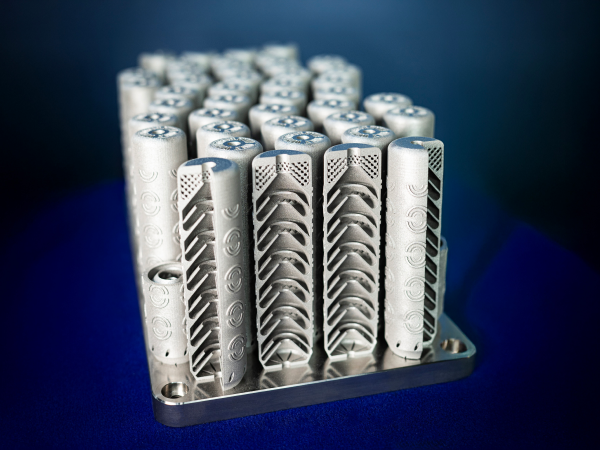
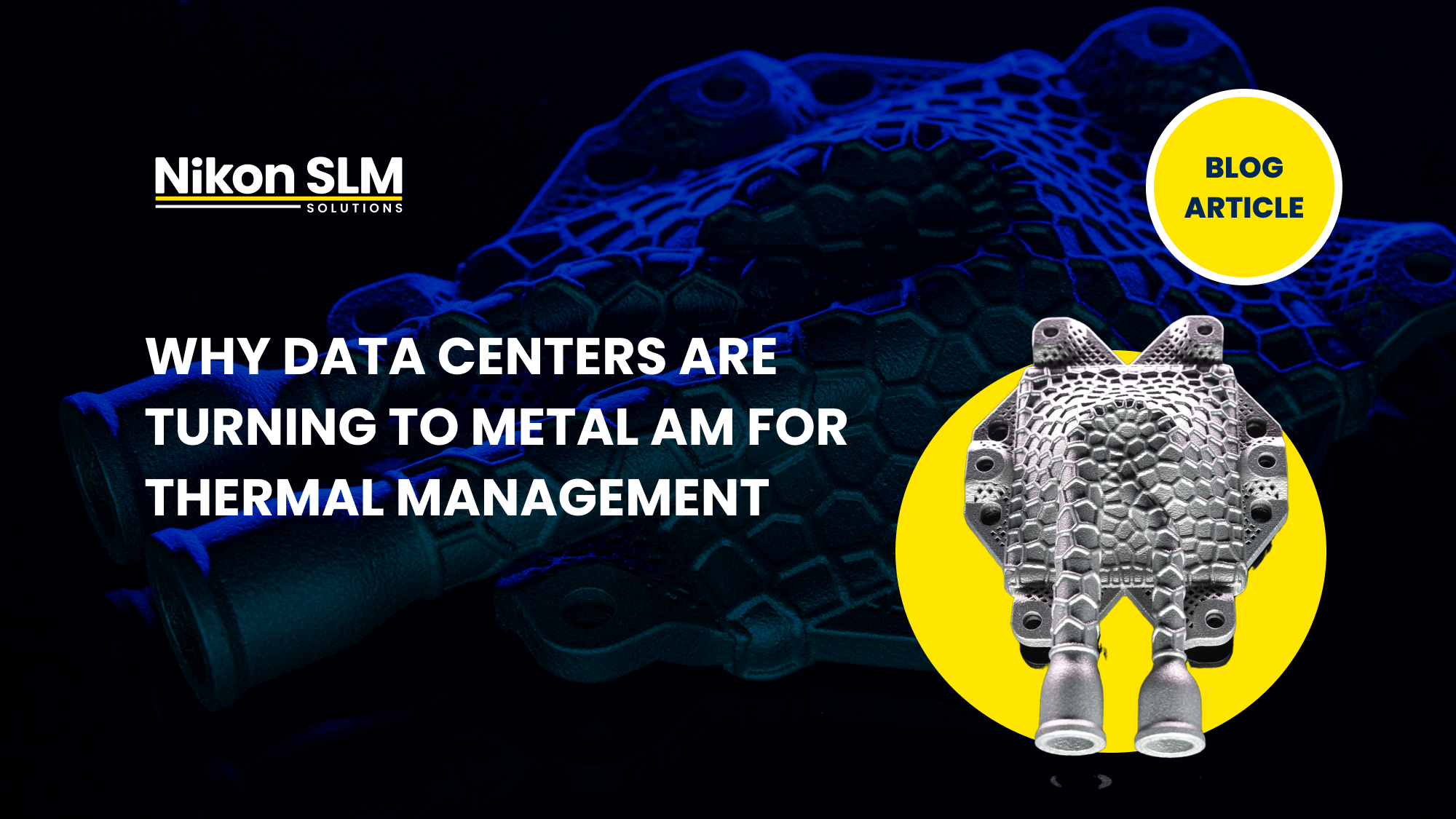
Metal additive manufacturing removes the geometric constraints that have limited two-phase cooling component design. Using laser powder bed fusion, internal wick structures with tunable porosity, conformal channels, and a robust external shell can be produced as a single monolithic part, with no assembly, no joining operations, and no leak points at seams or interfaces.
Critically, the design can be driven by multi-physics simulation data rather than by what a machine tool can reach. That means the internal geometry is shaped by the actual physics of fluid distribution and heat transfer, not by a compromise between thermal performance and manufacturability.
Producing the component as a single aluminum part also simplifies the end of its service life. Single-material construction means no need to separate bonded or brazed dissimilar materials before recycling.
Beyond the cooling component itself, two-phase systems enabled by additive manufacturing extract heat at temperatures between 60 and 80 degrees Celsius, substantially higher than typical air-cooled systems. Heat at that temperature can feed directly into district heating networks or industrial processes, including food and beverage, textiles, and greenhouse agriculture, without additional energy input. That shifts the energy balance of a data center from a one-way consumption model toward something closer to a net contributor to local energy infrastructure.
Where This Goes
The thermal challenge facing data centers is not a temporary scaling problem that next-generation air cooling will eventually catch up with. Power density is increasing faster than conventional cooling architectures can accommodate, and the energy cost of cooling is becoming a meaningful fraction of total operating cost.
Metal additive manufacturing makes it possible to design cooling systems around thermal physics rather than manufacturing limitations. The components that result are lighter, more reliable, more efficient, and capable of extracting heat at temperatures that open up reuse options that conventional cooling cannot support.
Success Story: 3D-Printed Component Cuts Data Center Cooling Energy, Beats Performance Target by 50%
For a concrete example of what this looks like in practice, Nikon SLM Solutions recently published a case study with the Danish Technological Institute and Heatflow ApS on a 3D-printed passive cooling evaporator produced on the SLM®280. The component delivered 600 watts of cooling capacity in testing, 50 percent above its original 400-watt target. Download the full case study here.


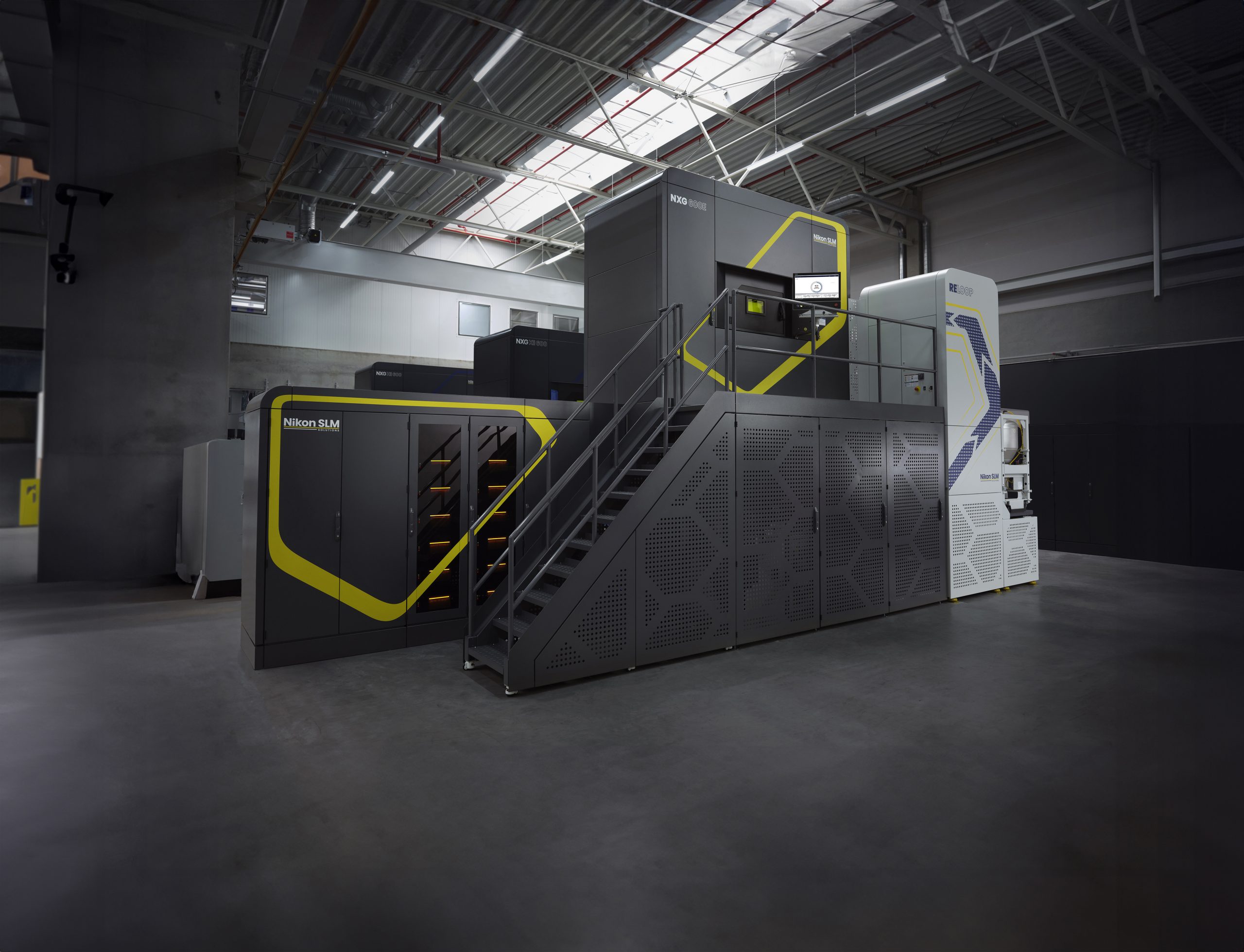



 NXG 600E
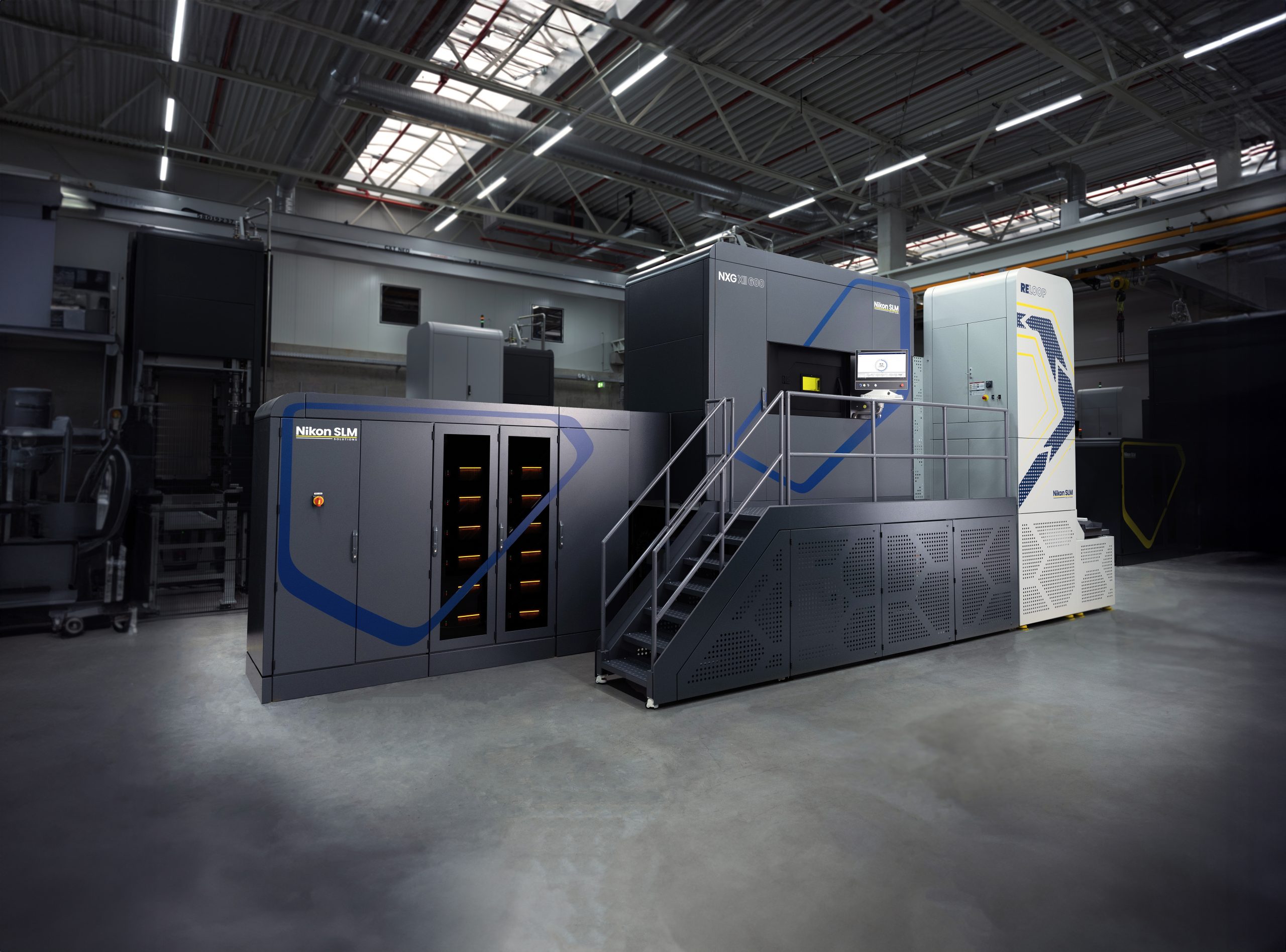
  NXG XII 600
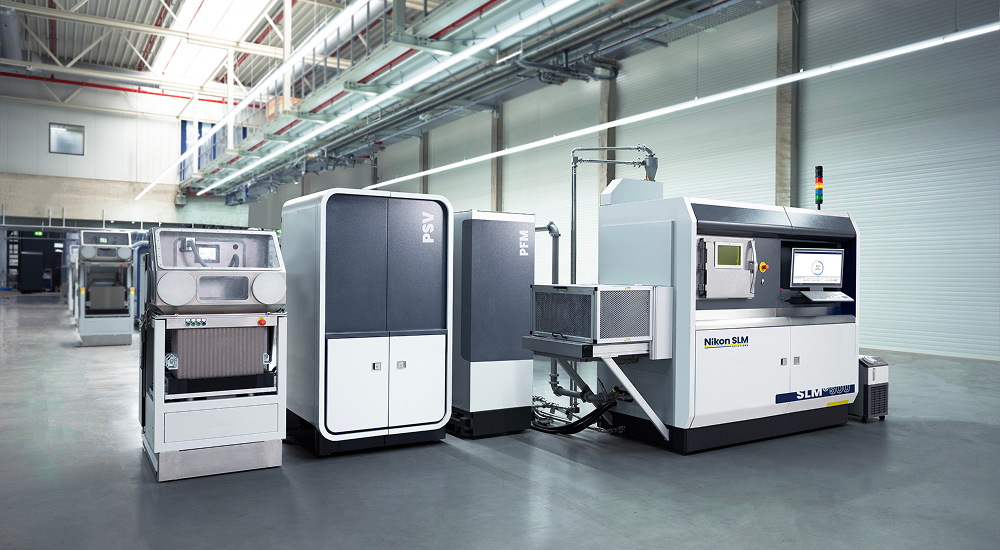
  SLM®500
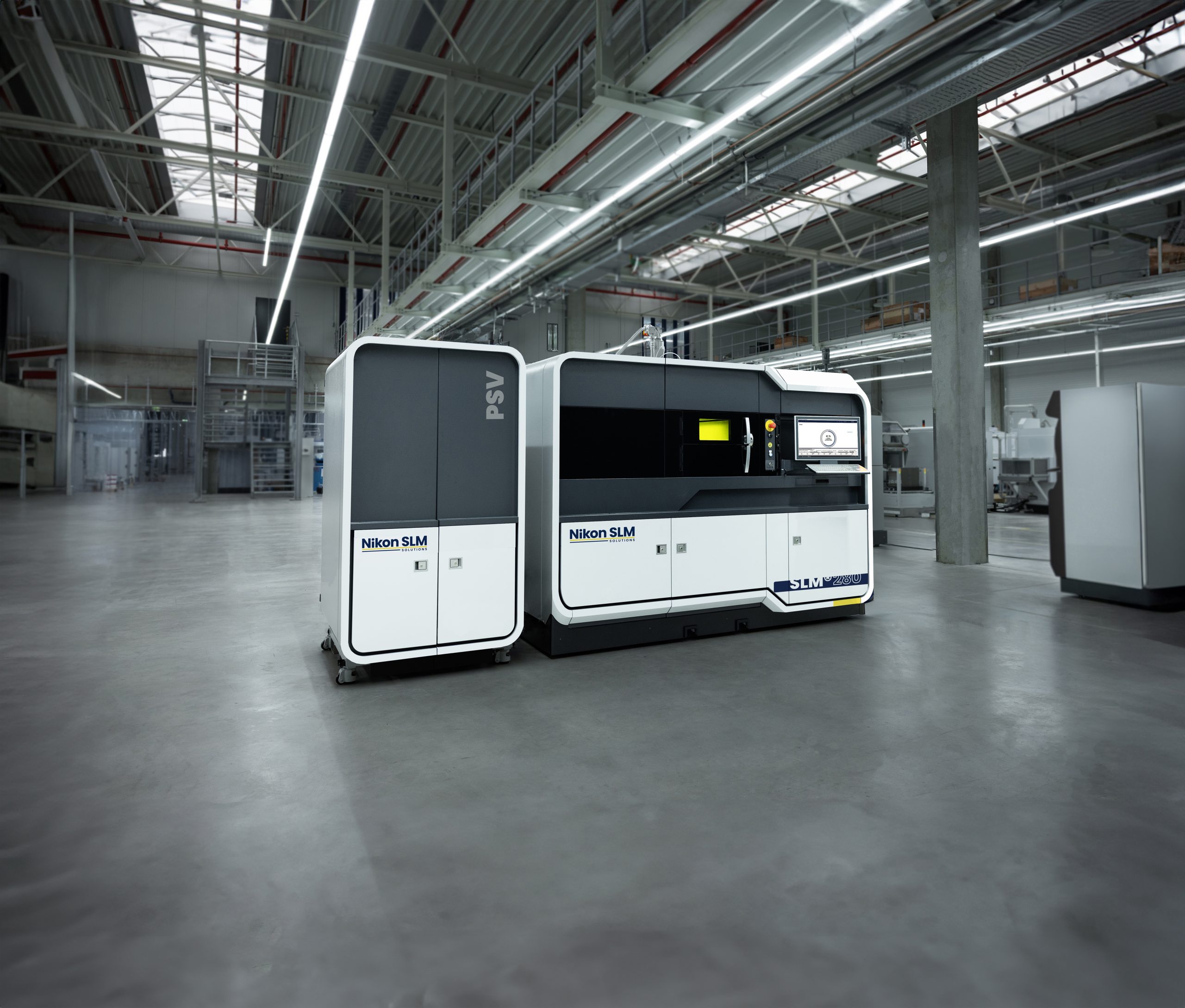
  SLM®280 PS
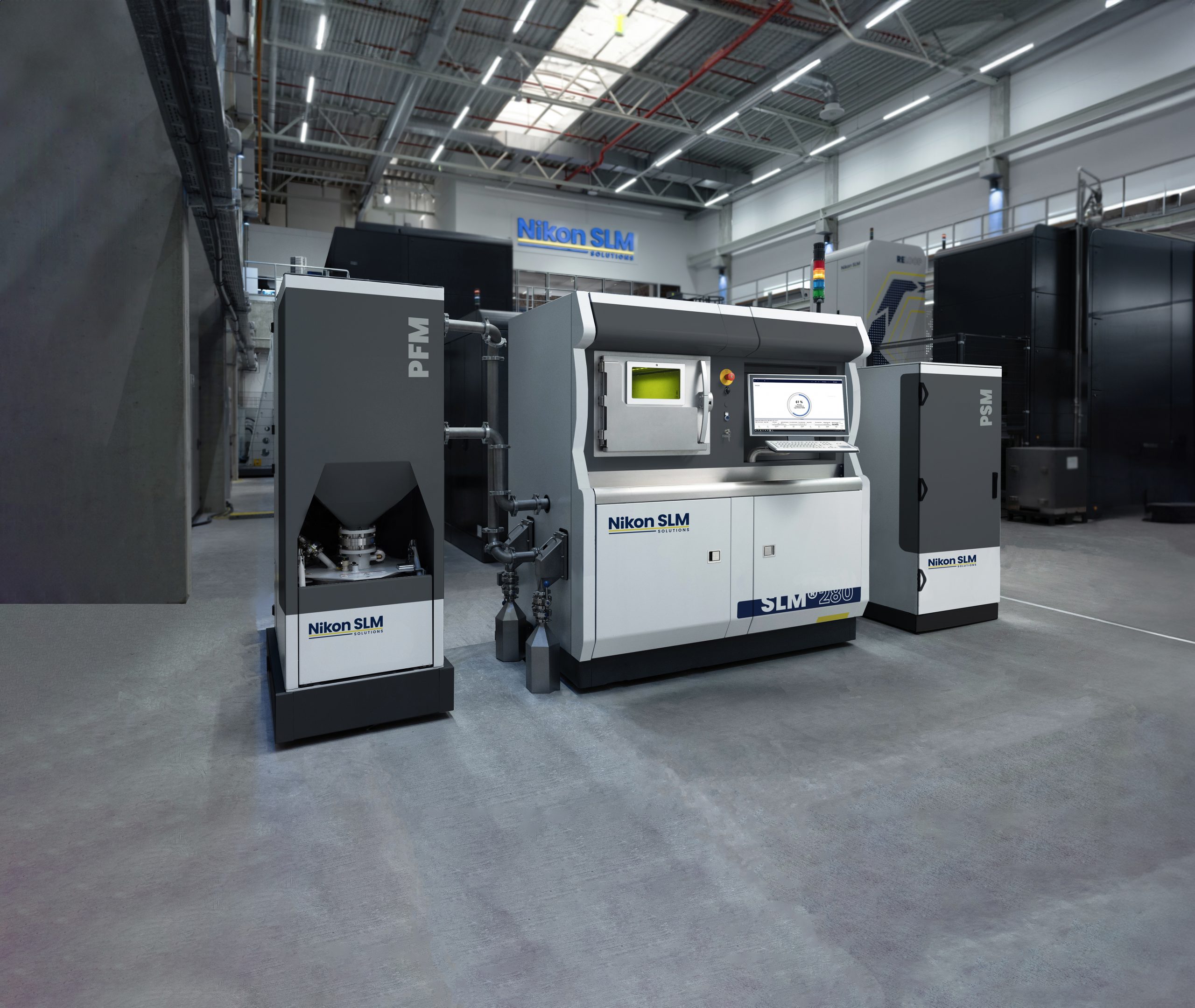
  SLM®280 2.0