© 2026 Nikon SLM Solutions AG


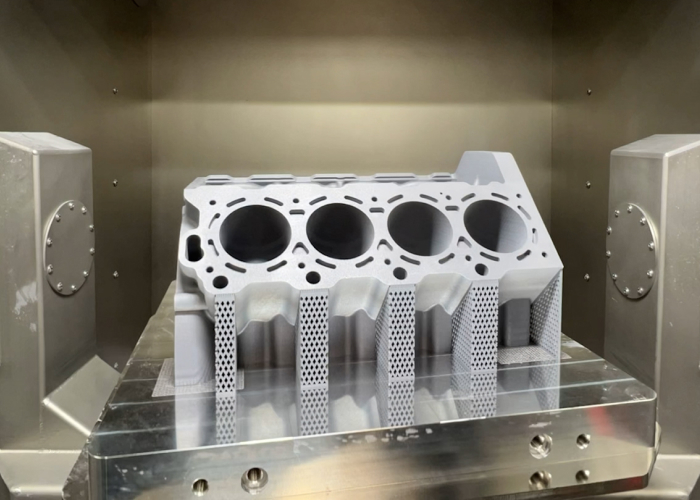
Some projects make a point more clearly than any specification sheet could. Printing a complete V8 engine block as a single piece, in aluminum, on a production-grade metal AM system, is one of them. That is exactly what has been achieved at the Bosch Additive Solution Center in Nuremberg, Germany, where Nikon SLM Solutions and Bosch Industry Consulting have collaborated to produce a full engine block in AlSi10Mg on the NXG XII 600.
The result is more than a technical demonstration. It is a clear signal that additive manufacturing is moving beyond prototyping and development, and into the kind of complex, high-value automotive applications where it can genuinely compete with and complement conventional manufacturing methods.
Why Partnerships Across the Supplier Ecosystem Matter
Automotive manufacturing is a supplier-driven industry. An estimated 60 to 80 percent of components in a finished vehicle are produced not by the OEM, but by the network of tier 1 and tier 2 suppliers that support it. For additive manufacturing to scale into real automotive production, it cannot remain confined to OEM development centers. It needs to take root across that wider ecosystem.
This is why the collaboration between Nikon SLM Solutions and Bosch Industry Consulting carries significance beyond the single project it produced. Bosch is one of the world’s leading tier 1 automotive suppliers, and the combination of Bosch’s deep manufacturing expertise with Nikon SLM Solutions’ additive manufacturing technology and application knowledge represents exactly the kind of partnership that is required to move AM from capability to production reality.
Scaling additive manufacturing into real production environments is not simply a matter of placing a machine on a factory floor. It requires close collaboration on materials, process parameters, design for additive manufacturing, software integration, and ongoing application development. The supplier relationship has to support all of those dimensions, not just hardware supply.
No Tooling. No Castings. Complex Geometry in Days.
The practical advantages that additive manufacturing offers in automotive applications are well understood in principle. The V8 engine block project puts those advantages into concrete terms.
A cylinder block produced through conventional casting requires tooling that takes weeks or months to develop and validate before a single production part can be made. Design changes require tooling modifications, adding further time and cost to every iteration. The geometry of the part is constrained by what the casting process can reliably produce.
With additive manufacturing, none of those constraints apply. Complex geometries are produced directly from the digital file, without tooling and without the lead times that casting imposes. Designs that would be impossible or uneconomical to cast, such as integrated cooling channels, topology-optimized structures, and consolidated multi-component assemblies, become entirely achievable. For applications like cylinder blocks at the heart of high-performance and motorsport powertrains, this opens genuinely new approaches to engine design.
Weight reduction is one of the most immediate benefits. By applying design for additive manufacturing principles, material can be placed precisely where structural analysis shows it is needed and removed where it is not, producing components that are significantly lighter than their cast equivalents without compromising performance. In motorsport and high-performance automotive applications, that kind of weight saving is not a marginal gain. It is a meaningful competitive advantage.
An End-to-End Partnership Model
At Nikon SLM Solutions, the role in projects like this goes well beyond supplying the machine. The NXG XII 600 is the production platform, but the value delivered to customers spans the full additive manufacturing workflow: materials development and qualification, process parameter optimization, software for data preparation and quality assurance, application engineering support, and ongoing service and process development.
For a project as demanding as a V8 engine block, that breadth of involvement matters. Producing a large, geometrically complex aluminum component as a single piece requires process parameters that are tuned for the specific alloy and geometry, DfAM expertise to ensure the design is optimized for the AM process, and quality assurance systems that can verify the result meets the required standards throughout the build.
The collaboration with Bosch Industry Consulting brought decades of automotive manufacturing knowledge to that equation. The combination of application-specific domain expertise on one side and deep additive manufacturing technology knowledge on the other is what makes projects like this possible, and what is required to translate demonstrator success into repeatable industrial production.
From Demonstrator to Production
The V8 engine block is a powerful example of what current additive manufacturing technology can achieve. But its significance lies in what it points toward rather than what it represents in isolation. Additive manufacturing is progressively moving into real automotive production environments, taking on applications that combine geometric complexity, performance requirements, and production volumes that would have been considered out of reach for AM only a few years ago.
For automotive suppliers evaluating where additive manufacturing fits in their production strategy, the message from this project is straightforward. The technology is ready, the partnerships are in place, and the production systems exist to take complex aluminum components from design to finished part without castings, without tooling, and without the lead times that conventional manufacturing requires.
The question is no longer whether additive manufacturing can deliver at this level. It already has.


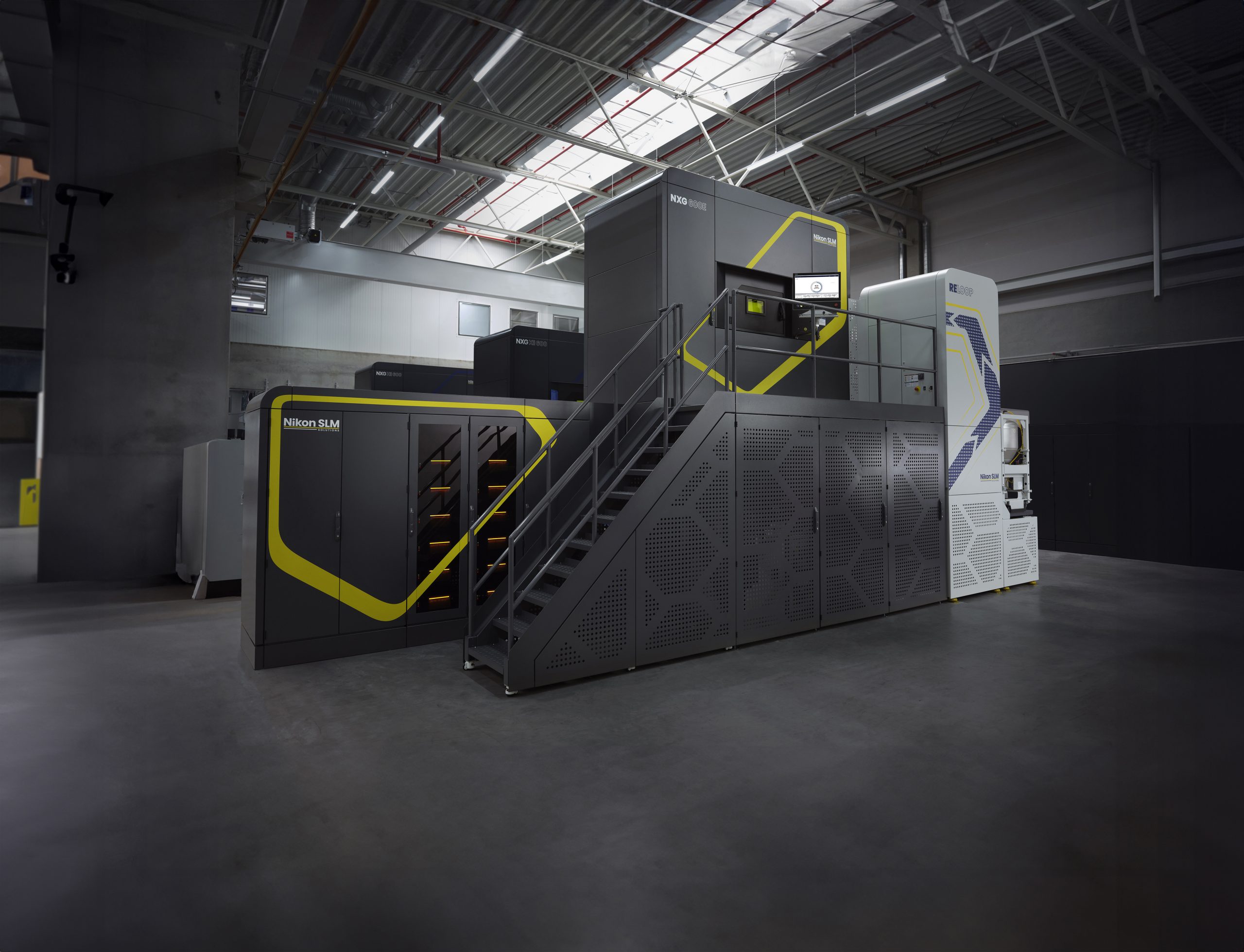



 NXG 600E
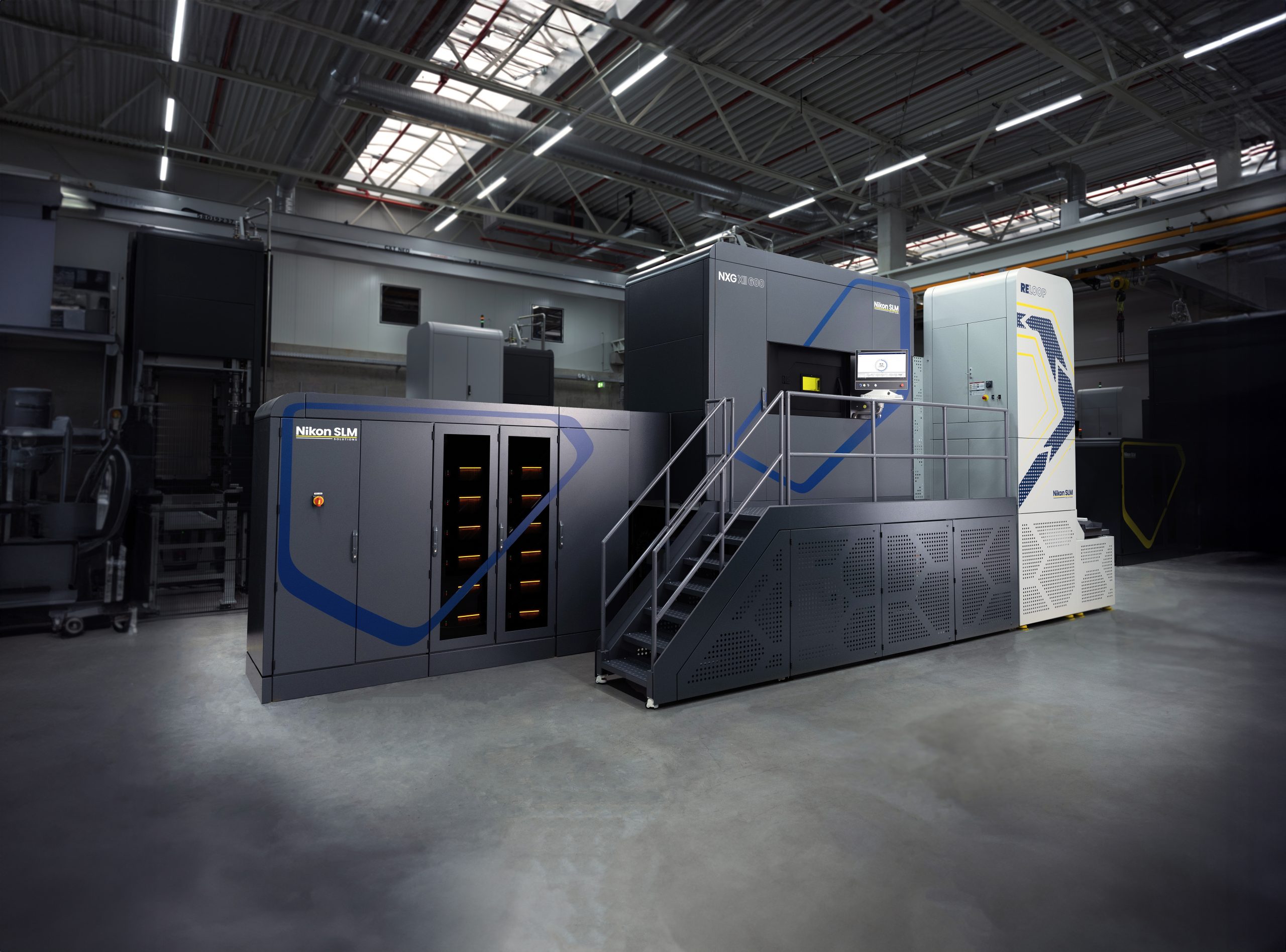
  NXG XII 600
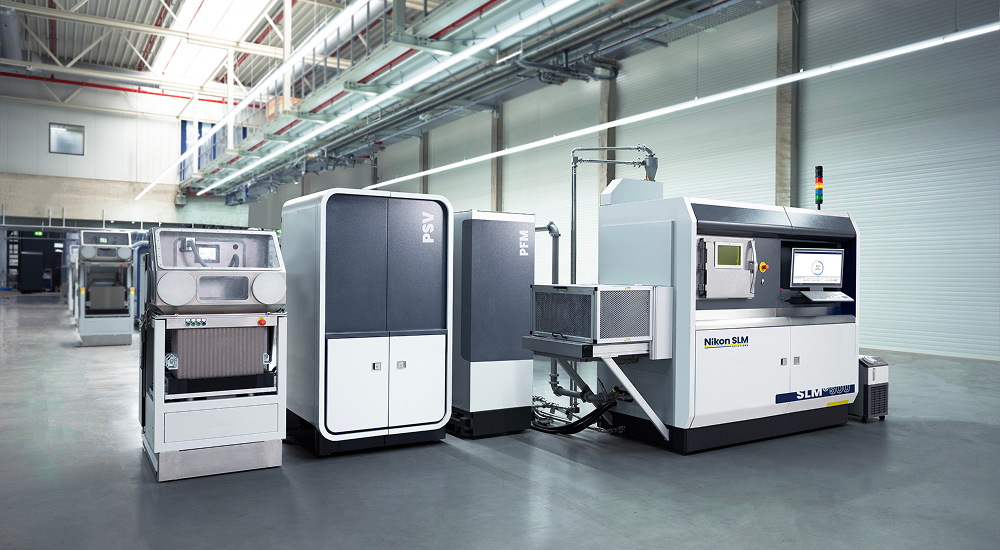
  SLM®500
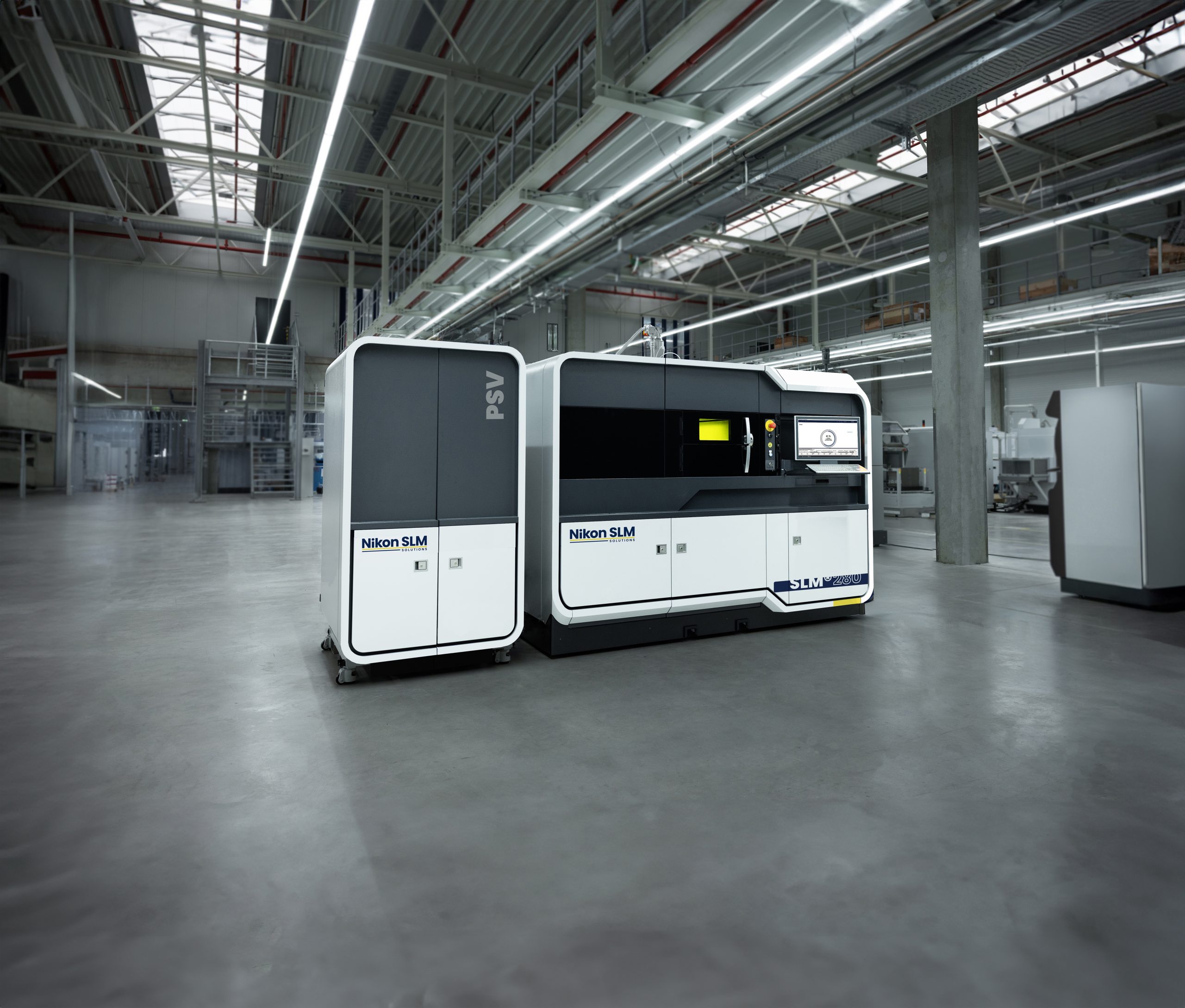
  SLM®280 PS
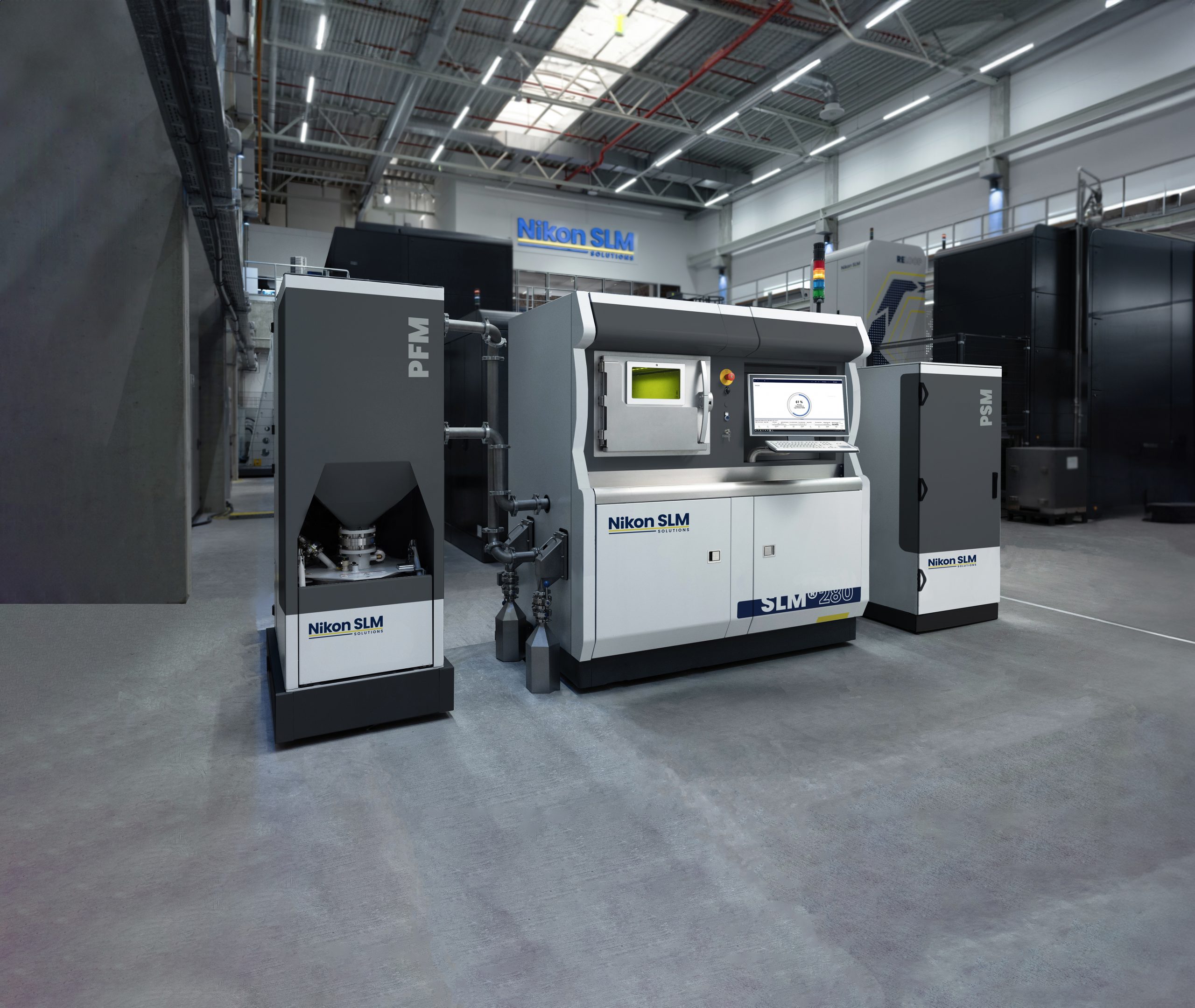
  SLM®280 2.0