Nikon SLM Solutions AG 2026
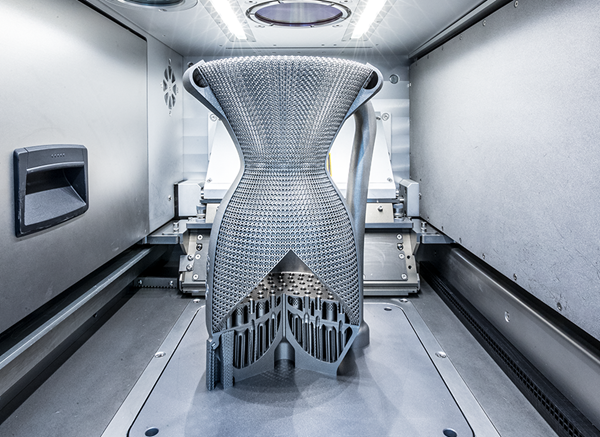
Traditional suppressor manufacturing is built on labor-intensive processes, multi-part assemblies, and dedicated tooling. The result is higher costs, longer development cycles, and a production model that only makes economic sense at scale, leaving little room to iterate, customize, or respond quickly to market demands. Metal additive manufacturing rewrites this equation. By consolidating parts, eliminating tooling dependencies, enabling complex internal geometries that are impossible to machine conventionally, and supporting rapid digital design cycles, metal AM reduces both cost and risk from the earliest stages of development. The advantages below show where metal AM delivers measurable gains in performance, acoustic efficiency, speed to market, and return on investment.
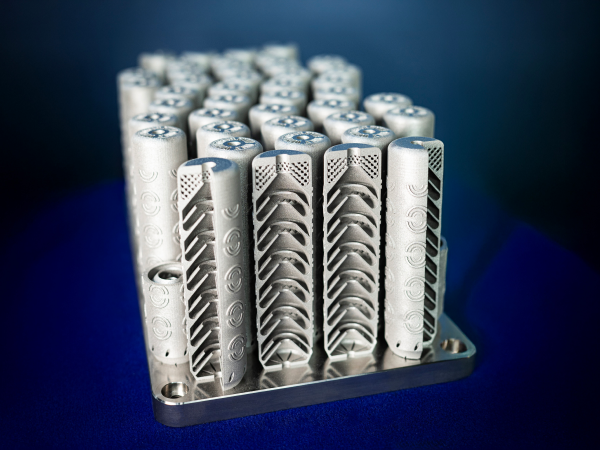
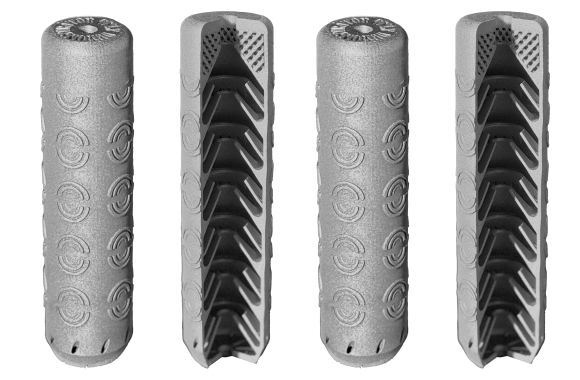
Metal additive manufacturing enables internal geometries that conventional machining simply cannot produce, from enclosed baffle structures to intricate gas flow paths optimized for sound attenuation. Designs are driven by ballistic and acoustic performance rather than the limitations of tooling, and complex internal features are produced as a single part rather than assembled from multiple components.
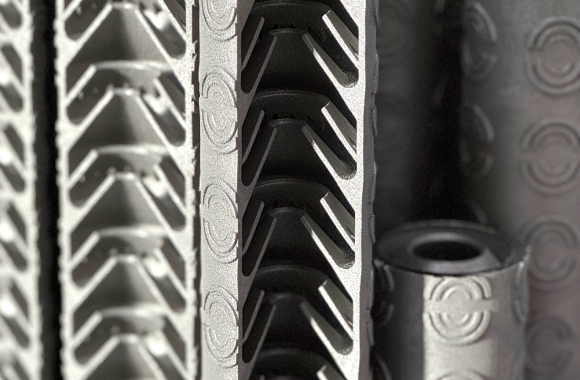
Metal AM produces suppressor cores as fully integrated, one-piece components. Without welds or threaded joints to introduce variability, manufacturers eliminate common failure points, reduce alignment risk, and achieve more consistent structural and acoustic performance across every unit and throughout the service life of the suppressor.
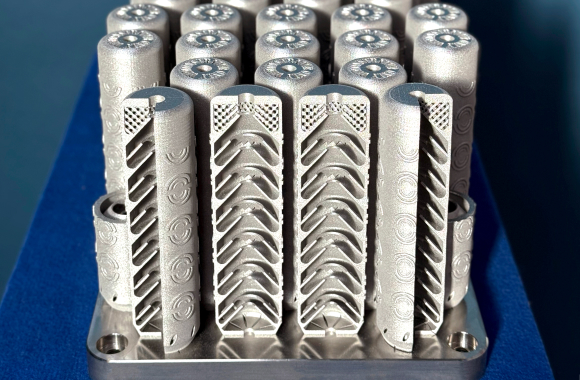
Metal AM enables material to be placed precisely where structural demands require it, rather than where tooling constraints dictate it. The result is suppressor designs with reduced mass that meet or exceed the mechanical strength, stiffness, and durability of conventionally manufactured components, without the penalties imposed by uniform wall thickness or limited tool access.

Traditional suppressors require numerous individual components, including baffles, spacers, end caps, and tubes, each of which must be machined, cleaned, and assembled before welding. Metal AM consolidates these into a single printed part, eliminating threading, welding, and multi-part assembly entirely. Fewer parts mean fewer labor hours, fewer inspection steps, and lower scrap and rework rates, all of which reduce per-unit manufacturing cost directly.
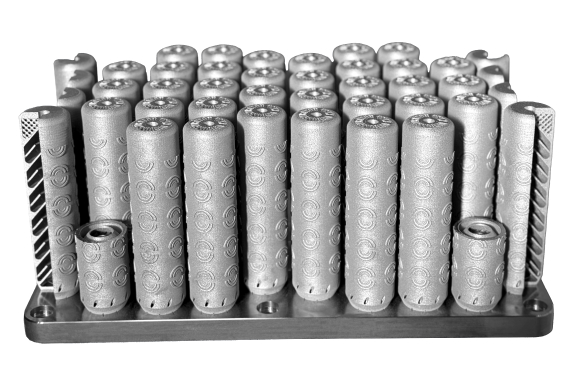
Traditional suppressor development cycles can stretch for months, constrained by machining lead times, tooling setup, and iterative welding and assembly. Metal AM compresses this timeline by allowing multiple design variants to be printed overnight on a single build plate. Functional prototypes can be tested and refined within days rather than months, reducing capital expenditure and accelerating the path from concept to a market-ready product.
The following examples show how suppressor manufacturers are putting metal additive manufacturing to work in production environments. Each case reflects measurable gains in performance, development speed, and manufacturing efficiency, demonstrating how the right technical partnership translates additive technology into real-world results at scale.