Nikon SLM Solutions AG 2026
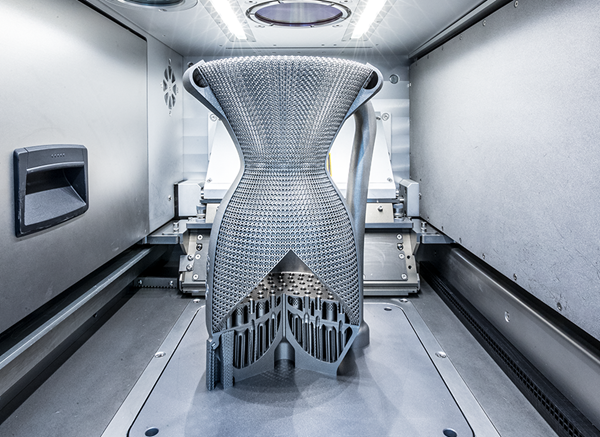
Suppressor performance is fundamentally constrained by the manufacturing process used to produce it. Traditional subtractive and fabrication-based methods limit internal geometry, material placement, and thermal control, forcing design compromises that directly impact durability, weight, and acoustic performance. Metal additive manufacturing removes many of these constraints by enabling complex internal features, integrated structures, and design-driven material optimization. As a result, suppressor designers can pursue performance gains that are not achievable with conventional processes while maintaining structural reliability under extreme thermal and pressure loads.
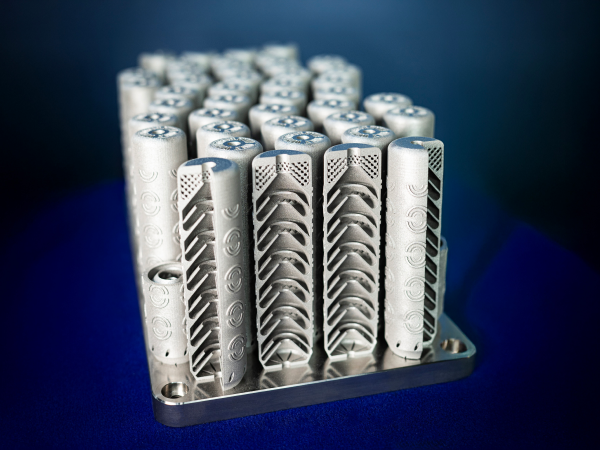
Most traditional suppressors are a collection of individual components welded together or threaded into a tube. Metal AM prints the entire unit, including internal baffles, the outer housing, and attachment threads, as a single continuous piece of metal. This eliminates weld failure points and seam leaks, resulting in a significantly stronger and more durable product. Furthermore, this unified construction ensures perfect alignment of internal features, which is critical for maintaining accuracy and preventing baffle strikes.
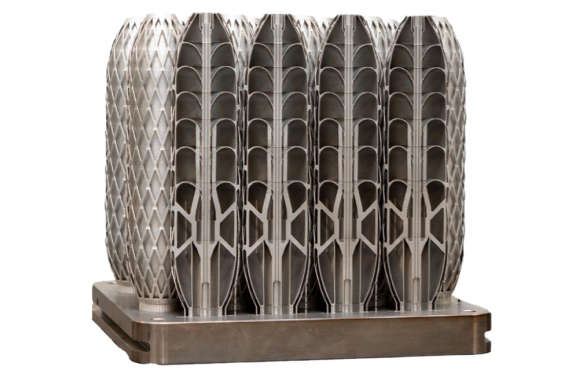
Metal additive manufacturing utilizes generative design and internal lattice structures to provide a superior strength-to-weight ratio. By reinforcing high-stress zones while removing mass from areas under lower pressure, 3D-printed titanium or Inconel suppressors can achieve a 20% to 50% weight reduction compared to traditional designs. This reduction in muzzle weight improves firearm balance and maneuverability while maintaining the structural integrity required for long-term use.
By consolidating multiple components into a single-build monolithic design, additive manufacturing eliminates the need for complex welding, threading, and the manual stacking of internal baffles. This transition significantly lowers labor input and reduces the inspection overhead typically required to verify the integrity of joints and welds. Streamlining the production process in this manner minimizes the risks of rework and scrap, ultimately driving down the total unit cost while increasing overall manufacturing throughput.
This white paper is structured to provide a clear, practical view of how metal additive manufacturing is being applied in suppressor production today. It is intended to guide engineers, manufacturing leaders, and decision-makers through the technical, operational, and economic considerations that influence successful adoption. The following section outlines the areas of focus explored throughout the paper and establishes the context for evaluating metal AM as a viable production approach that addresses key topics such as: