Nikon SLM Solutions AG 2026


March brings a clear signal from across the industry: additive manufacturing is maturing fast, and the evidence is showing up on the production floor. From Bosch’s serial production milestone to Wabtec’s push to extend fleet lifecycles with metal AM, from new material qualifications in offshore and defense to a proven platform that continues to lead its class, this month’s stories reflect a field that is moving with purpose. The thread running through March is performance at scale, and the industries driving that shift are as varied as the applications themselves.
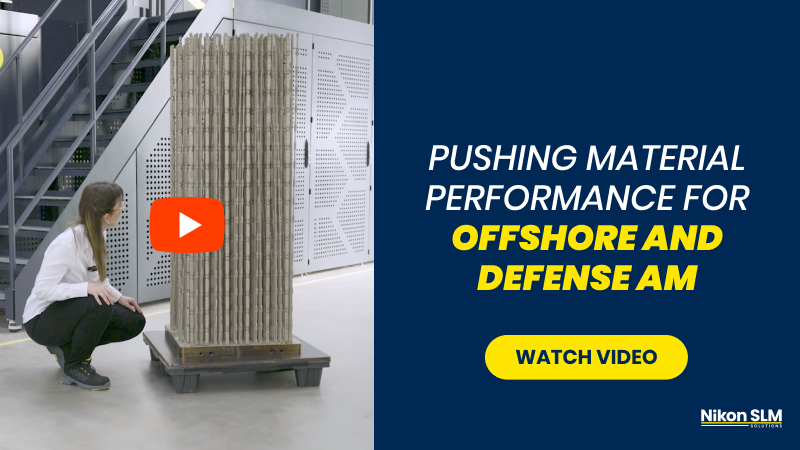
Nikon SLM Solutions has developed and optimized CuNi30 process parameters for the NXG XII 600 and NXG 600E, targeting offshore, defense, and energy applications. With testing conducted across the full 600mm build height, the work focused on achieving stable, high-density builds with low surface roughness through multi-laser processing. The material’s roughly 30% nickel content makes it well suited to seawater environments, combining strong corrosion resistance with solid mechanical performance. Watch the short video for a closer look at what went into the development and what it means for large-scale production in demanding conditions.
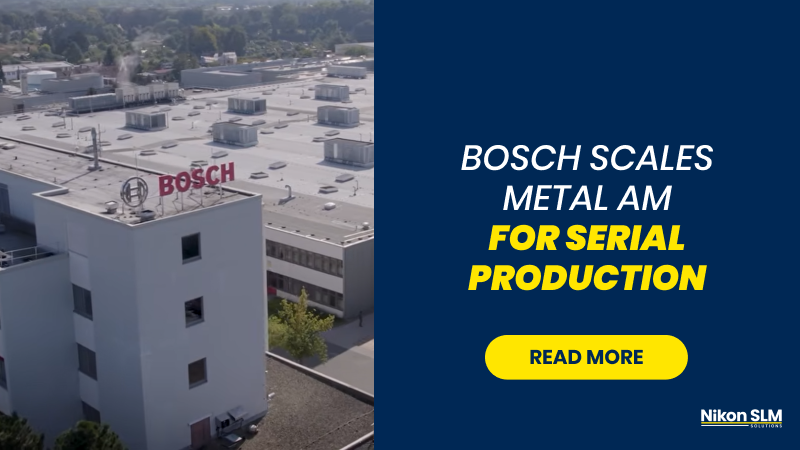
At Bosch’s Nürnberg facility, additive manufacturing has moved well beyond the prototyping lab. Equipped with the NXG XII 600 and underpinned by a deep strategic partnership, the plant is now using AM for serial production, competing on quality, cost, and volume alongside conventional manufacturing methods. The shift marks a meaningful inflection point: not just for Bosch, but for the broader conversation about where 3D printing fits in mature industrial operations. For anyone watching the evolution of advanced manufacturing, Bosch’s story is worth a close look.
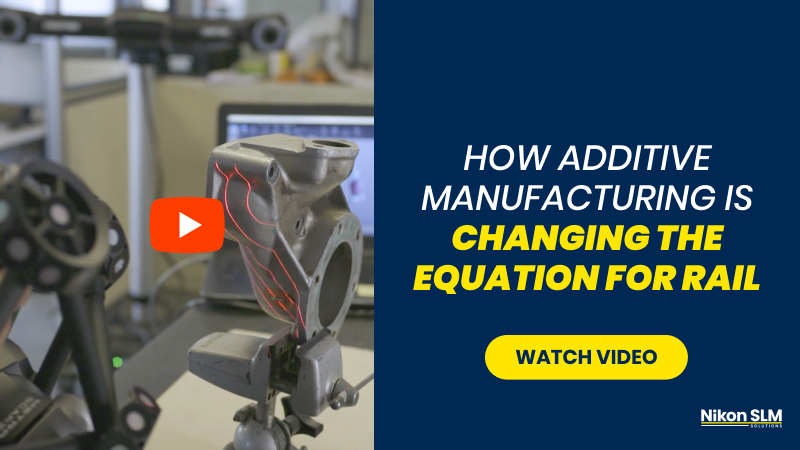
Train lifecycles stretching 40 to 50 years create a unique set of pressures: spare parts on demand, higher-performing components, lightweight designs, and no minimum order constraints. At Wabtec, metal additive manufacturing is becoming a key part of the answer, not just for next-generation platforms, but for extending the life of fleets already in operation. Watch the short video to hear how AM is shifting from an enabling technology to a critical lever for lifecycle extension and part consolidation in the rail industry.
Nikon SLM Solutions has qualified Haynes® 282® for production use on the NXG XII 600, using a 60 μm PRIM strategy. A gamma-prime strengthened nickel superalloy known for its high-temperature performance, Haynes® 282® has historically been difficult to process reliably at scale. This piece looks at what the qualification process involved, what the material brings to large-format additive manufacturing, and what it opens for turbine and structural component production in aerospace, space, and energy applications.
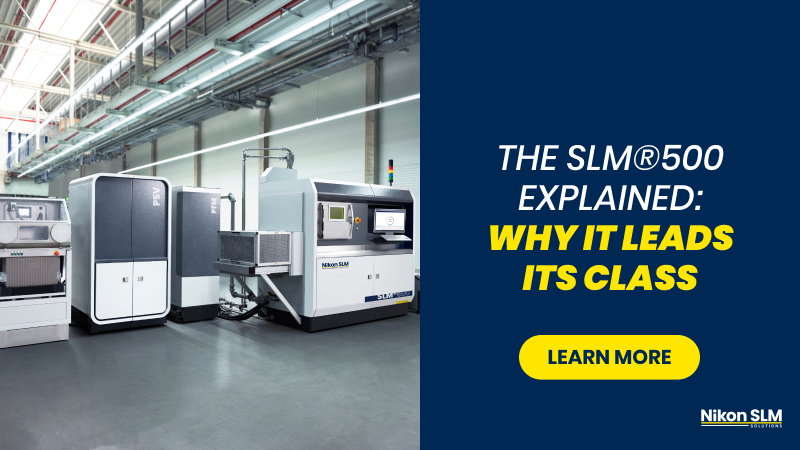
First introduced in 2011, the SLM®500 has become one of the most established platforms in production-focused metal additive manufacturing. Four 700-watt lasers, a closed-loop powder and gas system, and an industrial software ecosystem give it a specific technical profile that has held up well against newer entrants in the mid-size segment. This piece breaks down exactly what those specs mean in practice, and why the machine continues to be a reference point for manufacturers evaluating serious metal AM options.
A big thank you to the AMUG organizers for putting together another outstanding event, and to everyone who stopped by our booth for a conversation. The energy on the show floor was a reminder of how much momentum this industry continues to build, and those face-to-face exchanges are always among the most valuable parts of the year. If we didn’t get a chance to connect in Reno, or if you’d like to pick up where we left off, we’d love to continue the conversation.

Stay ahead of the curve with Addictive Additive, Nikon SLM Solutions‘ dedicated blog for exclusive business cases, expert insights, and the latest trends in additive manufacturing. Whether you’re exploring advanced aerospace applications, cutting-edge automotive innovations, or new material developments, our blog has you covered.
Advancing Suppressor Performance Through Metal Additive Manufacturing
Read Article
A Guide to High-Performance Materials in Suppressor Manufacturing
Read Article
Accelerating Innovation: How Nikon SLM Solutions Advances Metal AM Prototyping
Read Article
ExxonMobil
Driving High-Performance Racing Components Into the Future

Fundamental Motorsports
Driving High-Performance Racing Components Into the Future

Karman Space Programme
Pushing the Boundaries of Reusable Rocket Engines

Airbus
Transforming Fuel System Components With Additive Manufacturing
The Service Hub is dedicated to keeping your metal AM systems running at peak performance. From maintenance and repairs to expert technical support, we provide the reliable services you need to ensure consistent, high-quality production.
Powder Quality Management
Use only high-quality, certified metal powders, and implement sieving and monitoring practices to prevent contamination or particle degradation over time.
Operator Training
Ensure operators are trained not only in machine operation but also in best practices for part setup, powder handling, and safety procedures.
Regular Inspections
Inspect recoater blades, build plates, and optics frequently for wear or damage, and address small issues immediately before they escalate into costly downtime.

Curious about how metal additive manufacturing (AM) is reshaping industries?
Our collection of on-demand webinars gives you access to the latest innovations and trends in this transformative technology. From aerospace to energy, metal AM is changing the way we manufacture. Explore topics such as:
Ready to discover how metal AM can push your business forward? Watch our on-demand webinars and get inspired.

NI-BASED ALLOYS
Nickel-based alloys provide exceptional strength, heat resistance, and corrosion performance, making them essential for demanding applications in aerospace, energy, and industrial sectors where extreme temperatures and harsh environments require reliable, high-performing materials.

CU-BASED ALLOYS
Copper-based alloys offer outstanding thermal and electrical conductivity along with strong mechanical performance, making them essential for applications in tooling, electronics, and advanced energy systems where high strength and efficient heat or power transfer are critical.

TK Engineering and Nikon SLM Solutions are pioneering copper alloy AM for induction heating coils. Our SLM®280 delivers superior quality, efficiency, and sustainability, supporting carbon neutrality goals.

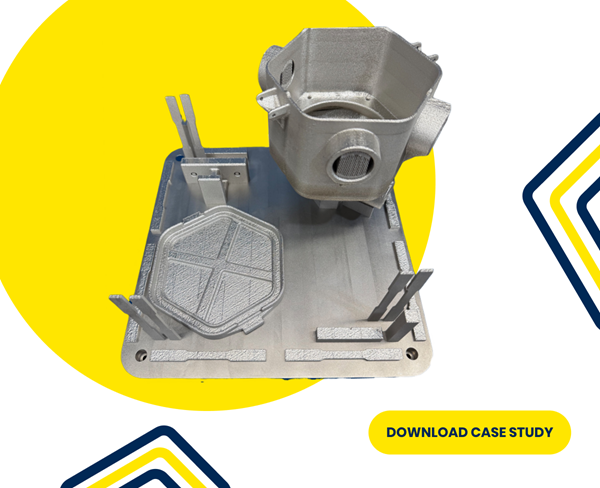
Download this case study to learn more about GRCop-42, a copper alloy essential for rocket engine components that require high thermal conductivity and strength.